What is Assimilasjon? A Simple Guide to Learning and Culture
Have you ever seen something new and tried to compare it to something you already know? That is basically what assimilasjon is all about. In simple terms, it is a way our brains and societies handle new information or people. Think of it like a puzzle piece. When you find a new piece, you try to fit it into the picture you are already building. This happens in our minds, in nature, and even in our neighborhoods. It is a very natural part of being alive and growing every day.
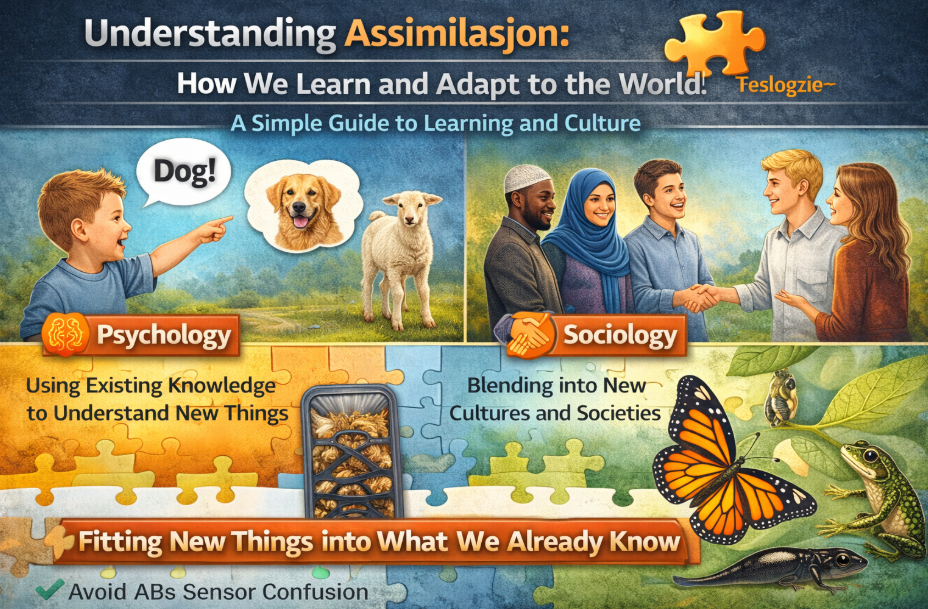
We use assimilasjon to make sense of a big, busy world. Without it, every single thing we saw would feel confusing. By using what we already know, we can quickly understand new things. For example, if a child knows what a dog is, they might see a lamb and call it a “dog.” They are using assimilasjon to fit the lamb into their “dog” category. It is a building block for learning that starts when we are very small and continues throughout our whole lives.
The Different Types of Adaptation
| Type of Process | Where It Happens | How It Works |
| Cognitive Assimilasjon | Inside the brain | Fitting new ideas into old categories. |
| Cultural Assimilasjon | In society | Minority groups taking on majority traits. |
| Biological Assimilasjon | In living cells | Turning food into part of the body. |
| Linguistic Assimilasjon | In language | Sounds changing to match nearby sounds. |
| Social Integration | In communities | People joining together as one group. |
How Our Brains Use Assimilasjon to Learn
In psychology, assimilasjon is a key idea from a famous man named Jean Piaget. He studied how children learn. He noticed that kids don’t just sit there like empty buckets. Instead, they actively try to understand things using “schemas.” A schema is like a mental folder in your brain’s filing cabinet. When a child experiences something new, they try to put it in an existing folder. This specific process is called assimilasjon. It helps us feel safe because the world feels familiar.
However, assimilasjon is only half of the story. Sometimes, the new information is too different to fit into an old folder. When that happens, we have to make a new folder or change an old one. But before we do that hard work, our brain always tries assimilasjon first. It is the path of least resistance. It allows us to process thousands of bits of data every second without getting a headache or feeling overwhelmed by too many new details.
Assimilasjon in Different Cultures and Societies
When people move to a new country, they often experience cultural assimilasjon. This means they might start to speak the local language or dress like the people there. They might also start eating the same foods as their new neighbors. This kind of assimilasjon can help people feel like they belong in a new place. It can make finding a job or making friends much easier. Many people see it as a way to unite different groups into one big community.
But cultural assimilasjon can be a bit complicated too. Sometimes, people worry that they might lose their original culture if they change too much. It is a delicate balance between keeping your own roots and growing in a new soil. True assimilasjon in society works best when people feel welcome and supported. It is not just about changing who you are. It is about finding a way to share a common life with others while still being yourself deep down inside.

Why Is This Process Important for Kids?
For children, assimilasjon is like a superpower for growth. Every day is an adventure filled with new sights and sounds. By using assimilasjon, kids can learn very fast. If they know that “round things roll,” they will try to roll an orange or a ball. They don’t have to learn a brand-new rule for every single round object. This helps them build confidence as they navigate their homes and schools. It makes learning feel like a fun game of matching.
Teachers also love the idea of assimilasjon. They try to connect new lessons to things the students already love. If a teacher is explaining math, they might use pieces of pizza as an example. The students use assimilasjon to understand fractions because they already understand pizza. This makes the new information “stick” better in their memories. When learning feels familiar, students are less likely to give up. It creates a bridge from the known to the unknown.
Looking at Biological Assimilasjon in Nature
Plants and animals use assimilasjon too, but in a physical way. For a plant, this means taking in sunlight, water, and air. They turn these simple things into food so they can grow big and strong. This biological assimilasjon is how life keeps going on Earth. Without it, plants couldn’t create oxygen for us to breathe. It is a beautiful cycle where nature takes what is available and turns it into something useful and full of life.
In our own bodies, assimilasjon happens after we eat a meal. Our stomach breaks down the food into tiny pieces. Then, our cells take those pieces and use them to fix our skin or give us energy to run. This is a very deep form of assimilasjon. We are literally turning the world around us into our own muscles and bones. It shows that we are always connected to the environment. We are constantly taking parts of the world and making them part of us.
The Big Difference Between Assimilasjon and Accommodation
Many people get confused between assimilasjon and accommodation. Let’s make it simple. Imagine you have a box for “birds.” You see a blue jay, and you put it in the box. That is assimilasjon. But then you see a plane flying in the sky. You try to put it in the “bird” box, but it doesn’t fit. It doesn’t have feathers and it doesn’t eat worms. Now, you have to create a new box for “planes.” That change is called accommodation.
Both of these tools are needed to be smart. If we only used assimilasjon, we would never learn that planes are different from birds. We would think everything in the sky was a bird! But if we only used accommodation, our brains would be too busy making new boxes for every tiny thing. Assimilasjon allows us to be efficient, while accommodation allows us to be accurate. Together, they help us build a very clear and detailed map of the world in our heads.
How Language Changes Through Assimilasjon
Have you ever noticed how some words are hard to say quickly? Language uses assimilasjon to make speaking easier. This happens when one sound changes to be more like a sound next to it. For example, in the word “handbag,” many people say “hambag.” The “n” sound changes to an “m” to get ready for the “b” sound. This is a natural shortcut our mouths take. It shows that even our speech likes to find ways to fit together smoothly.
This linguistic assimilasjon happens in almost every language on the planet. It makes our conversations flow better. If we pronounced every single letter perfectly, we would sound like robots! Instead, we blend sounds together. This is a form of “speech harmony.” It is fascinating to see how the same rules that help us learn and live in groups also help us talk to each other. It proves that assimilasjon is everywhere, even in the very air we breathe out as words.
Personal Insights: Why I Love This Topic
I think assimilasjon is a beautiful concept because it is about connection. It shows that we are always trying to find a place for new things in our lives. Whether it is a new friend, a new idea, or a new meal, we are constantly expanding our world. In my experience, the people who are best at assimilasjon are often the ones who are most curious. They aren’t afraid of new things because they know they can find a way to understand them.
I once met someone who moved to a new town and felt very lonely. But then, they started practicing assimilasjon by joining a local hobby group. By finding common ground with their neighbors, they quickly felt like part of the family. This is the positive side of the process. It is about building bridges. When we look for what is similar instead of what is different, we can all live together much more happily. It makes the world feel like a smaller and kinder place for everyone.
Tips for Better Learning and Growth
To use assimilasjon well, you should always look for connections. When you read a new book, ask yourself, “What does this remind me of?” This simple question triggers the assimilasjon process in your brain. It helps you remember the new information much better. You can also help children learn by pointing out how new things are like things they already know. This builds their “mental folders” and makes them feel like experts in their own little worlds.
Another tip is to be patient with yourself. Sometimes, assimilasjon takes time. You might have to see something a few times before it truly fits into your understanding. That is okay! Your brain is doing a lot of hard work behind the scenes. By staying open to new experiences, you give your mind more chances to practice this skill. The more you learn, the more “folders” you have, and the easier assimilasjon becomes for everything you encounter in the future.
Common Myths About Assimilasjon
Some people think that assimilasjon means you have to give up your identity. This is a big myth! In sociology, you can adapt to a new group while still keeping your own special traditions. You don’t have to choose one or the other. Another myth is that assimilasjon is only for kids. While kids do it a lot, adults use it every single day at work or when learning a new hobby. Your brain never stops trying to fit things together.
Another mistake is thinking that assimilasjon is always “easy.” While it is faster than making new mental categories, it still requires focus. If you try to force a new idea into a folder where it doesn’t belong, you might get confused. This is why it is important to stay honest with yourself. If something truly doesn’t fit, it might be time for accommodation instead of assimilasjon. Knowing when to use each tool is the secret to being a truly great and lifelong learner.
Conclusion
In the end, assimilasjon is a wonderful tool that helps us grow and stay safe. It allows our brains to work fast, our bodies to stay strong, and our societies to stay united. By understanding how we fit new things into our existing lives, we can become better learners and more empathetic neighbors. It is all about finding that special “fit” that makes the world make sense. So, the next time you see something new, take a moment to appreciate how your mind is working.
We encourage you to look for assimilasjon in your own life today. Is there a new task at work that is like something you did before? Is there a new neighbor you can welcome? By actively participating in this process, you make your life richer and more colorful. Keep asking questions and keep building those connections. The more you engage with the world, the more amazing the process of assimilasjon becomes. Start your journey of discovery today!
Frequently Asked Questions
1. Is assimilasjon a bad thing for cultures? Not necessarily. While some people fear losing their roots, assimilasjon can also help people find common ground and live together peacefully. It is most successful when it is a choice made by the person.
2. How do I help my child with learning assimilasjon? You can help by using analogies. Tell them things like, “This new fruit tastes a little bit like an apple.” This helps their brain find the right “folder” for the new information.
3. What is an example of biological assimilasjon? A great example is photosynthesis. This is when plants take light and carbon dioxide and turn them into sugar for energy. They are “assimilating” the environment into their own bodies.
4. Can adults still use assimilasjon? Yes, absolutely! Adults use it every time they start a new job or use a new piece of technology. We are always looking for ways to relate new tasks to things we already know how to do.
5. Why did Piaget focus so much on this? He wanted to show that intelligence is not just about how much you know. It is about how you adapt to new situations. Assimilasjon is one of the most important ways humans adapt to survive.
6. Is there a downside to using assimilasjon? The main downside is that we might ignore important details just to make something fit into an old category. This is why we also need accommodation to stay accurate and learn the truth.